
What to Feed a Maine Coon
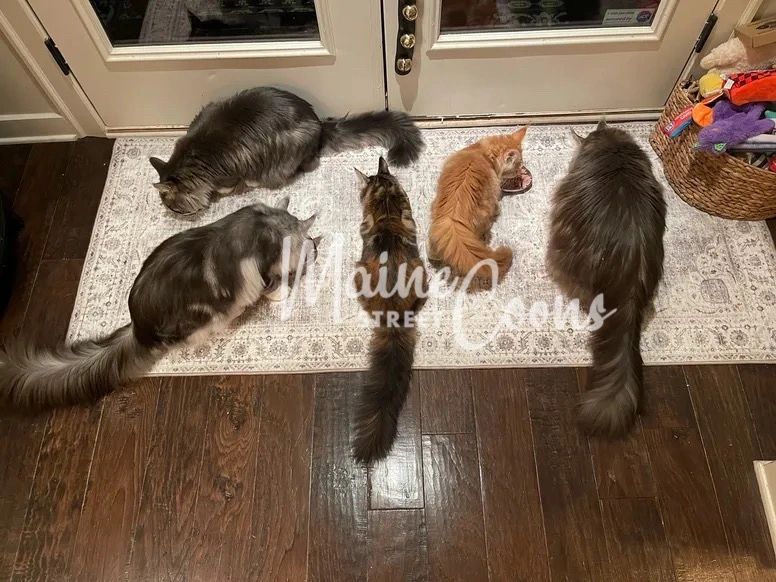
Congratulations on becoming a Maine Coon owner! Good nutrition is one of the most important things you can give your new cat for a long, healthy life. This guide skips the marketing fads and offers simple, science-based advice on what to feed a Maine Coon kitten or adult cat.
The Ideal Diet: Wet and Dry Food Together
Wild cats live on prey that is high in protein and moderate in fat, with few carbohydrates, and those same building blocks still shape your Maine Coon's nutritional needs. Cats also need more than a dozen other nutrients, such as vitamins, minerals, and amino acids. High-quality, commercially prepared cat food is the simplest and safest way to cover them all. For your Maine Coon, the best choice is a mix of high-quality wet and dry foods suited to their life stage (age), which together deliver solid nutrition.
Wet food is an excellent source of moisture. Cats are notorious for drinking too little water, which can contribute to urinary tract and kidney trouble later on. Canned food is 75% moisture or more, so it helps keep your cat well hydrated. When you pick a wet food, make sure the label says it is a complete meal and not just a "treat."
What We Feed Our Own Maine Coons
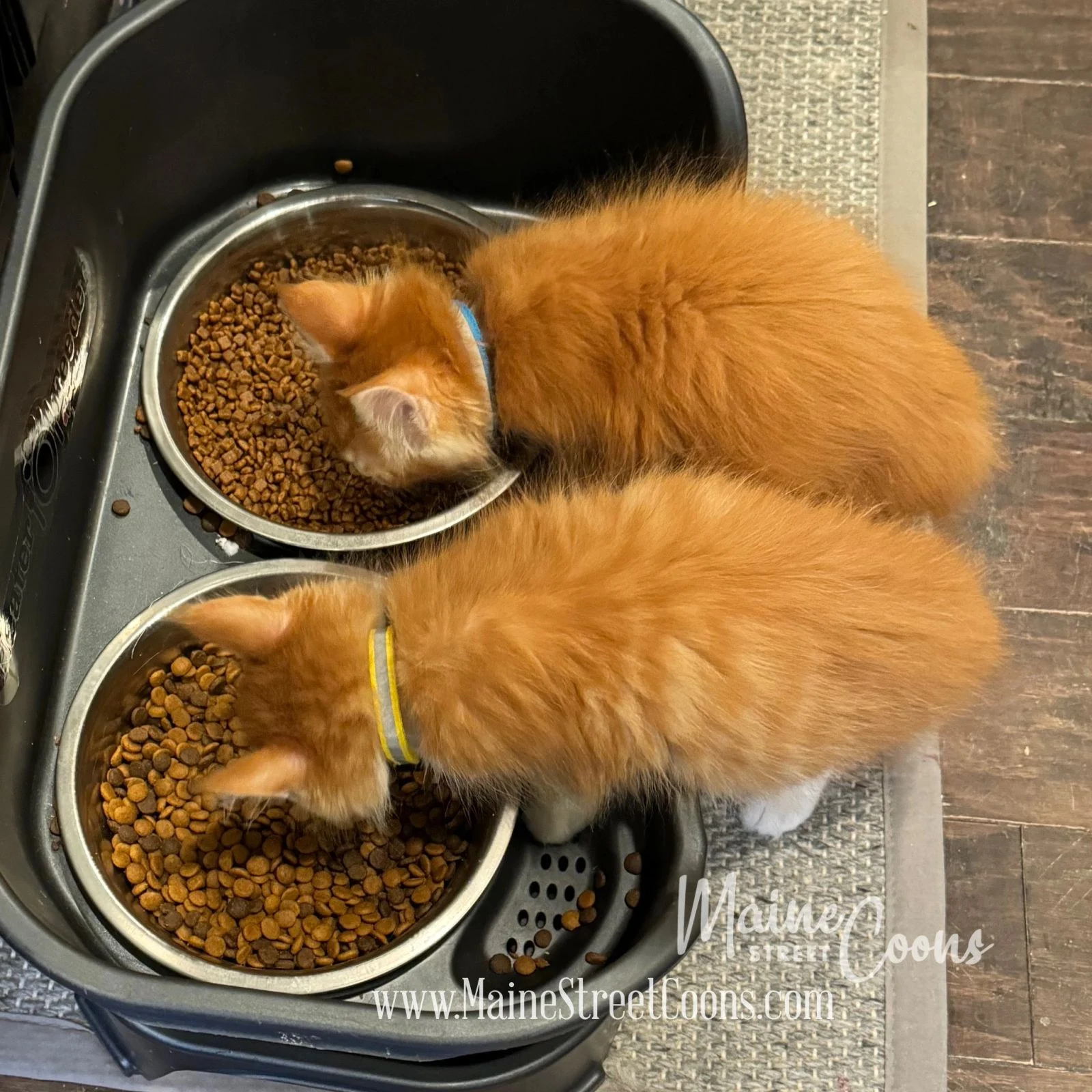
Our cats and kittens eat a consistent dry food along with a rotating mix of the high-quality canned foods below, so their nutrition stays balanced and mealtime never gets boring.
Dry Kibble:
- Royal Canin Maine Coon Kitten (for ages 12 weeks to 12 months)
- Royal Canin Maine Coon Adult (for ages 1 year and up)
Our Recommended Canned (Wet) Foods:
- Royal Canin Kitten Loaf (for ages 12 weeks to 12 months)
- Royal Canin Maine Coon Slices in Gravy (for ages 1 year and up)
- Nulo Kitten
- Weruva Kitten Can Jam
- Instinct Rabbit Entree
- Reveal Chicken Variety Pack
- Purina ProPlan Kitten & Adult
Why We Advise Against Raw Food Diets

Raw feeding is a popular trend, but neither we nor the broader veterinary community recommend it.
Our reasons:
- Bacterial Risk: Raw meat, including commercially prepared raw diets, can carry dangerous bacteria such as Salmonella and E. coli, which can lead to serious illness, hospitalization, or even death in pets and people alike.
- No Proven Benefits: No scientific evidence shows that raw diets produce better health or shinier coats. Raw prey may be what wild cats eat, but they frequently live shorter lives and face more health problems. We can do far better for the pets we love.
- It's in Our Contract: Our adoption agreement specifically prohibits feeding a raw diet. We have seen firsthand how dangerously ill a kitten can become from a bacterial infection, and we want to shield our cats and your family from that risk.
With so many safe, nutritionally complete choices available, the risks of raw feeding far exceed any supposed benefits.