
New Owner's Guide
3 Weeks Before Pickup: Book a Vet Visit
Congratulations, New Maine Coon Owners!
Get ready for your kitten's homecoming with this simple new Maine Coon kitten checklist.
3 Weeks Out: Book Your Vet Appointment
- Schedule ahead: Vet offices can fill up fast.
- Choose a cat-friendly vet: Search with this tool, or look for vets that bill Trupanion directly to make claims easier.
2 Weeks Out: Prepare a Safe Space
Set up a cozy room that includes:
- A carrier, a blanket with mom's scent, and a bed
- Food and a water fountain (placed away from the litter box)
- A litter box filled with Dr. Elsey's Kitten Attract litter
- A scratching post and toys
Remove hazards: Exposed cords, toxic plants, open windows, and small objects such as string.
1 Day Out: Activate Your Trupanion Insurance
- 30 days of free coverage: Activate it with the toll-free number and breeder code.
- A lifetime policy is required: It shields your kitten from unexpected health expenses.
What to Bring on Pickup Day:
- Your kitten's carrier.
- Cash for the remaining balance.
- Young children are best left at home so things go smoothly.
Once Home: Food & Nutrition
- Dry food: Keep Royal Canin Kitten available around the clock.
- Wet food: Offer one can each day.
- Probiotics: For the first 10 days, sprinkle Proviable Forte on each meal.
Days 1-3: Time to Bond
- Spend calm, quiet time together in the safe space.
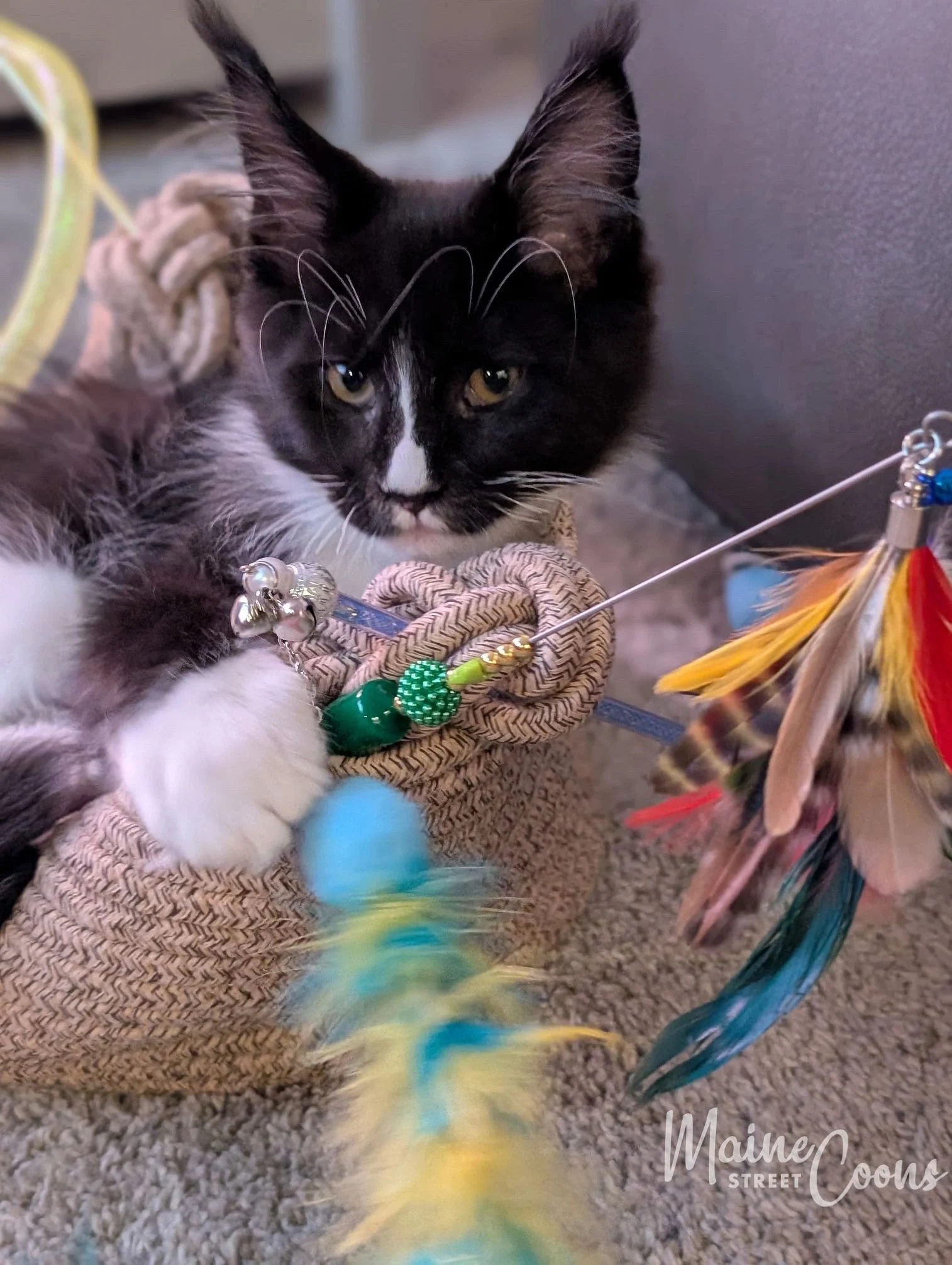
- Play using interactive toys.
- Keep hands out of playtime to build good habits.
First Vet Exam (Within 72 Hours)
- Take along the health records and vaccination certificates.
- Ask your vet to walk you through the benefits and drawbacks of the feline leukemia vaccine.
Spay or Neuter (9-12 Months)
- Our contract requires it.
- Waiting to spay or neuter lowers health risks such as hip problems.
Grooming Basics:
- Bathe kittens weekly and adults every 4-6 weeks.
- Comb daily to prevent tangles and mats.
Foods That Are Toxic to Cats:
- Onions, garlic, chocolate, grapes, alcohol, and others.
Support for Life:
We are always here for you! Reach out anytime for guidance on nutrition, behavior, or health.
Why Pet Insurance Is Required
Your Maine Street Coons kitten goes home with 30 days of free health coverage from Trupanion. By email or text, we have sent you a brochure describing your 30-day free coverage, along with steps for activating it using our offer code.
- The day before pickup, please call the toll-free number listed in the brochure to activate your kitten’s policy, and have the Breeder Activation code from the brochure ready. Kittens are not released until an active policy is in place.
Under our purchase agreement, you must keep this policy in force for your cat’s entire life. We have taken every precaution to reduce genetic health risks, but life is unpredictable. Keeping it in place means no cat we have bred will ever be euthanized for financial reasons. If you have coverage questions, Trupanion’s customer service team will gladly help.
Litter Boxes and Good Habits
Our Maine Coon kittens go home with excellent litter box habits, trained to recognize and use both standard litter boxes and the Litter-Robot. Even so, at 14 weeks old they are still babies, despite their size, and need litter boxes close at hand to keep those good habits. Always provide more than one box in convenient spots: at least one on each level of the house, and in households with several cats, one per cat on every level.
- Pick the right box: Maine Coons grow into large adults, so choose a spacious box that is easy to step into, or the Litter-Robot 4 for the greatest convenience
- Choose a good spot: Put boxes in quiet areas with little foot traffic, away from food and water
- Keep boxes clean: Scoop at least once a day and replace the litter weekly, or empty the Litter-Robot's waste drawer as needed
Our favorite is the Litter-Robot 4, thanks to its odor control and easy, low-maintenance upkeep. If you go with this box, skip the stair accessory, since your kitten already hops in comfortably. No one pays us to endorse these boxes; we simply recommend them because they work so well.
Spay or Neuter Requirement
Our contract requires spaying (females) or neutering (males), and the surgery must be done between nine and twelve months of age. The procedure brings important health and behavior benefits for your Maine Coon kitten: it prevents unplanned litters, lowers the risk of certain cancers, and reduces problems such as spraying or roaming. Please schedule the surgery within this window as one part of being a responsible pet owner.
The Case for Delayed Spay or Neuter
In Maine Coons, a serious hip condition is avascular necrosis (AVN) of the femoral head, sometimes called SCFE (Slipped Capital Femoral Epiphysis). Neutering early (above all before 6-9 months) significantly raises the risk, because it eliminates the hormones that regulate growth. That can lead to joint instability, late closure of the growth plates, and weaker bone and muscle support, which raises vulnerability to this condition and to hip dysplasia. For this large breed, that means waiting longer to neuter.
Why Neutering Too Early Is Risky for Maine Coons
- Hormones and Growth: Testosterone and estrogen help tell the growth plates when to close and support the development of bone and muscle.
- Late Growth Plate Closure: Removing these hormones early can keep growth plates open longer, which may result in longer limbs and unstable joints.
- Higher Risk of SCFE: That instability, along with the breed's natural predisposition, leaves the femoral head more likely to slip and develop AVN.
- Hip Dysplasia: Neutering early also raises the risk of this common problem in Maine Coons.
For any procedure that requires sedation, we strongly recommend pre-anesthesia bloodwork. This simple test helps confirm that your Maine Coon kitten is in excellent health and can safely have the spay or neuter surgery. It gives the veterinarian useful information about your kitten's organ function, making it possible to spot risks or hidden conditions that might otherwise be missed. This precaution helps make the procedure as safe as it can be for your beloved pet.
Introducing Your Kitten to Other Pets
If there are other pets in your home, introduce your Maine Coon kitten gradually and always with supervision. Begin by letting them sniff one another through a closed door. Next, move to brief, supervised nose-to-nose meetings with the kitten in a crate or carrier, and at last to full face-to-face meetings, rewarding with treats and praise to build positive associations. Never hurry or force the process.
Exchanging scents is a vital step when your Maine Coon kitten meets other pets, dogs in particular. Before they meet face to face, trade bedding, toys, or blankets between your pets so each can get used to the other's smell. This lowers anxiety and builds familiarity, so later encounters go more smoothly.
If you have a dog, make sure it has solid recall before introducing the two. Your dog should dependably respond to cues such as "come" or "stay," even when excited. That way you can manage its behavior and keep both your kitten and your dog safe during introductions. Positive reinforcement training sessions can sharpen your dog’s focus and responsiveness and set the stage for a good relationship between your pets.
How to Bathe Your Maine Coon, Step by Step
Getting Ready: Set Yourself Up for Success
1. Gather Your Supplies:
- Shampoos: Dawn (blue, original formula) for degreasing, plus a kitten shampoo for kittens or Chris Christensen Clarifying Shampoo for adults. Keep Chris Christensen White on White on hand for white coats.
- Vinegar Rinse: In a container, combine 20% white vinegar with 80% warm water.
- Towels: Keep several big, absorbent towels within reach.
- Comb: A stainless steel butter comb for grooming before and after the bath.
- Dryer: A dryer made for pets, such as a Duz brand dryer (never a human hair dryer).
- Sink Setup: Do all bathing and rinsing in your kitchen sink with its sprayer. Keep the water warm, never hot.
2. Trim Nails:
- Trim both front and back nails before bathing to avoid accidental scratches.
3. Comb Out Mats:
- Work out any tangles or mats with a stainless steel butter comb, paying special attention to the tail, belly, armpits, and the area behind the ears.
- For a greasy coat, work cornstarch into the fur and comb it through to soak up oil. This step is critical, because water makes mats tighten.
4. Apply a Degreaser:
- Apply a degreaser such as Farber's Pre-Step Creme or Les Pooch F&T Degreaser to spots where oil tends to build up, like the area behind the ears and the tail base (known as "stud tail").
- For best results, work the degreaser down to the skin.
Bath Time
5. Rinse Off the Degreaser:
- Set your cat in the sink and rinse away the degreaser with the sprayer and warm water, moving from behind the ears back toward the tail. Shield your cat's eyes by cupping a hand over the brow bone. Be thorough and make sure every bit of product is gone.
6. Wet the Entire Coat:
- Soak your cat’s coat completely with the sprayer, undercoat included, again working from behind the ears toward the back. The fur must be fully saturated before any shampoo goes on. Expect this to take longer than you think, since the coat naturally repels moisture, a trait suited to a harsh climate.
7. First Shampoo: Degreasing with Dawn:
- Lather Dawn (blue, original formula) thoroughly through the coat, concentrating on oily spots such as the belly, the tail base, and behind the ears.
- Massage it through the fur all the way down to the skin.
8. Rinse Thoroughly:
- Rinse the coat carefully with the sprayer. Then rinse again, and again. Rinsing is where most mistakes happen, so take your time and leave no soap behind.
9. Second Shampoo: Kitten or Clarifying Formula:
- Use a gentle kitten shampoo on kittens.
- For adults, choose Chris Christensen Clarifying Shampoo to keep the coat shiny and healthy.
- Work the shampoo into the coat so it is evenly covered.
10. Rinse Again:
- Give extra attention to the tail, legs, and belly, and keep rinsing until the water runs perfectly clear.
Optional: White Coat Shampoo:
- On cats with white, silver, or smoke coloring, use Chris Christensen White on White shampoo on the white areas.
- Leave it on for 10 minutes to brighten the coat, keeping your cat wrapped in a towel meanwhile so they stay warm.
11. Next-to-Final Rinse:
- Rinse for a minimum of 10 minutes. This critical step removes every trace of shampoo and residue, so use the sprayer and be thorough.
12. Final Vinegar Rinse:
- Pour the vinegar rinse you mixed earlier (20% white vinegar, 80% warm water) over the coat, keeping it away from the head.
- Finish with 2-3 minutes of cool water to seal the coat and wash away any remaining product.
Drying the Coat
13. Remove Excess Water:
- Press the water out of the coat gently with your hands, moving down the legs and tail to get rid of as much as possible before you towel dry.
14. Towel Dry:
- Wrap your cat in a big, absorbent towel and blot dry. Do not rub, since rubbing can create tangles.
- Grab a second towel if more moisture needs absorbing.
15. Blow Dry:
- Dry the coat with a pet dryer such as a Duz brand dryer. Never use a dryer meant for people, because it can overheat or damage the fur.
- Direct the air against the lay of the coat to build volume at the roots.
- Once the coat starts to dry, comb gently through the fur with a stainless steel butter comb.
- On the tail, make a part down the middle and comb the hair out to each side for volume while drying.
Grooming After the Bath
16. Final Comb Through:
- When the coat is fully dry, comb through with the butter comb to make sure no tangles or mats remain.
- Give special attention to the belly, armpits, and tail.
17. Reward Your Cat:
- Finish on a happy note with a treat or a little playtime. It reinforces good behavior and makes the next bath easier.
Tips for a Calm, Stress-Free Bath
- Start Young: Bathe your Maine Coon from kittenhood so the routine feels familiar.
- Stay Calm: Use a soothing voice and gentle hands from start to finish.
- Be Prepared: Laying out all your supplies in advance makes the bath faster and smoother.
- Check the Water: Keep it warm, never too hot or too cold, so your cat stays comfortable.
Lifetime Breeder Support
To us, adopting a Maine Coon kitten marks only the beginning of a lifelong bond between you and your new companion. That is why we proudly offer Lifetime Breeder Support. Questions about nutrition, behavior, grooming, or health? No matter how big or small, we are glad to help. We want your Maine Coon to enjoy a long, healthy, happy life, and we want you to keep experiencing the joy and companionship these wonderful cats bring. Never hesitate to contact us; a call or a message is all it takes to reach us!