
Maine Coon Genetic Diversity: What COI and Inbreeding Mean for Your Kitten
July 15, 2025|Breeding
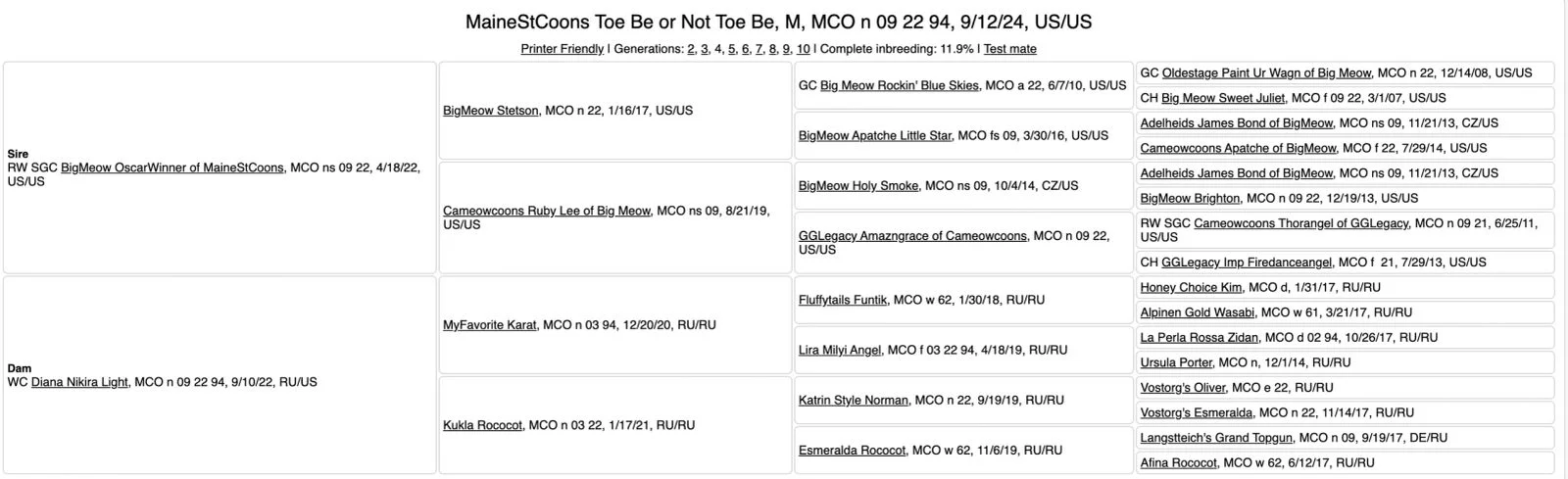
Choosing a Maine Coon kitten for your family involves more than falling for a fluffy tail and a sweet nature. Behind those iconic looks lies a heritage that ethical breeders must protect with great care. One key idea to understand is Maine Coon genetic diversity, the foundation that keeps the breed healthy and thriving.
In this post, we explain the Coefficient of Inbreeding (COI), what inbreeding percentages tell you, and why genetic diversity is so important for protecting the health of this beloved breed. We will also show you how to choose an ethical preservation breeder so the kitten you bring home is strong and healthy.
What Is COI, and Why Is It Important?
The Coefficient of Inbreeding (COI) estimates the probability that a cat inherits two copies of the same gene from a common ancestor. In short, it measures how closely related the two parents are. COI is shown as a percentage, and the higher that number, the more inbred the kitten is likely to be.
In simple terms:
- A lower COI points to less inbreeding, greater genetic diversity and a reduced chance of inherited health problems.
- A higher COI points to more inbreeding, less genetic variety and a greater risk of hereditary disease or lower vigor.
Experts often advise keeping a cat's COI below a set threshold (usually under 15% for Maine Coons) to support long-term health. After decades of inbreeding, that goal cannot always be reached. Preservation breeders, though, study pedigrees and calculate COI with genetic tools, which lets them choose pairings thoughtfully and bring these percentages down gradually. With every new litter, an ethical breeder works to lower the kittens' inbreeding percentage.
Why Should COI Matter to You?
High levels of inbreeding can contribute to health problems like these:
- Weakened Immune Systems: When genetic diversity is lacking, a population is less able to fight off disease.
- Congenital Issues: Problems like heart disease or hip dysplasia may show up more often in cats that are inbred.
- Reduced Lifespan: As in people, a narrower gene pool can reduce vitality and length of life.
When you choose breeders who make low COI values a priority, you help shield your kitten from these risks and support the health of the whole breed. It is a responsible choice that backs ethical breeding and helps curb the backyard breeding that harms the breed you love.
Why Genetic Diversity Matters in Maine Coons
The Maine Coon is a natural breed that originated in the U.S. Even so, modern breeding habits can narrow its genetic diversity. This happens when the same "popular sires" are used again and again, or when unrelated lines grow hard to find.
Genetic diversity matters because it:
- Helps the breed stay resilient against disease.
- Lowers the chance of hereditary conditions.
- Keeps the population vibrant and healthy for years to come.
Without diversity, the Maine Coons we know and love could become more exposed to genetic bottlenecks, in which traits, harmful ones such as HCM included, become magnified.
How Ethical Breeders Protect Genetic Health
Ethical preservation breeders do far more than raise kittens to sell. They see themselves as guardians of the breed, devoted to preserving its health and temperament as well as its beauty. This is how they manage genetic diversity and inbreeding:
1. Careful Pedigree Analysis
They review lineage records to spot possible overlaps, so they can pair cats whose genetics complement each other instead of cats that are closely related. At Maine Street Coons, we depend heavily on an international breed registry available through PawPeds.
2. Genetic Testing
Today, many breeders use DNA testing and similar tools to check for inherited diseases and measure genetic diversity. These tests also help them estimate COI more precisely.
3. Selective Breeding Practices
Rather than chasing trends or turning out "designer kittens," they plan each pairing carefully, meeting demand while strengthening genetic health.
4. Education and Advocacy
Preservation breeders teach buyers, encourage well-informed choices, and clear up myths about pedigrees and breeding. When Maine Coon lovers trust and support these breeders, they can keep up their mission of protecting genetic diversity.
What to Ask a Breeder
To be sure the breeder you choose is ethical and committed to genetic diversity, bring a few good questions with you, such as:
- What COI do the kittens have?
- How do you plan pedigrees to lower inbreeding?
- Which genetic tests were done on the parents?
- Do you put the breed's genetic health first, or are certain traits your priority?
A good breeder will be open and honest, and happy to walk you through how they keep their cats healthy.
Why This Matters When You Buy a Kitten
Choosing breeders who put health first is an investment in your future cat's well-being and in the long-term vitality of the Maine Coon breed. These decisions help make sure that kittens for generations to come share the same playful spirit, strong health and majestic beauty.
A cat with a lower COI is less likely to face chronic health problems, which may also mean fewer vet bills and a better quality of life for you and your cat alike.
The Bigger Picture
When you support breeders who care about genetic diversity, you help push back against irresponsible habits such as backyard breeding or overusing popular bloodlines. Working alongside ethical breeders, kitten buyers like you play an essential part in shielding the Maine Coon population from genetic risk.
Final Thoughts
Welcoming a Maine Coon kitten is an exciting adventure, and picking the right breeder is key to making sure your new companion lives a happy, healthy life. By valuing low COI and genetic diversity, you help build a future in which Maine Coons keep thriving in overall health, not only in looks.
Take your time with research, ask good questions, and find a breeder dedicated to preserving this wonderful breed. With your support, Maine Coons can stay the gentle giants we all adore for many generations ahead.