
Maine Coon Eye Colors: What Green and Gold Reveal About Authenticity
April 10, 2024|Genetics
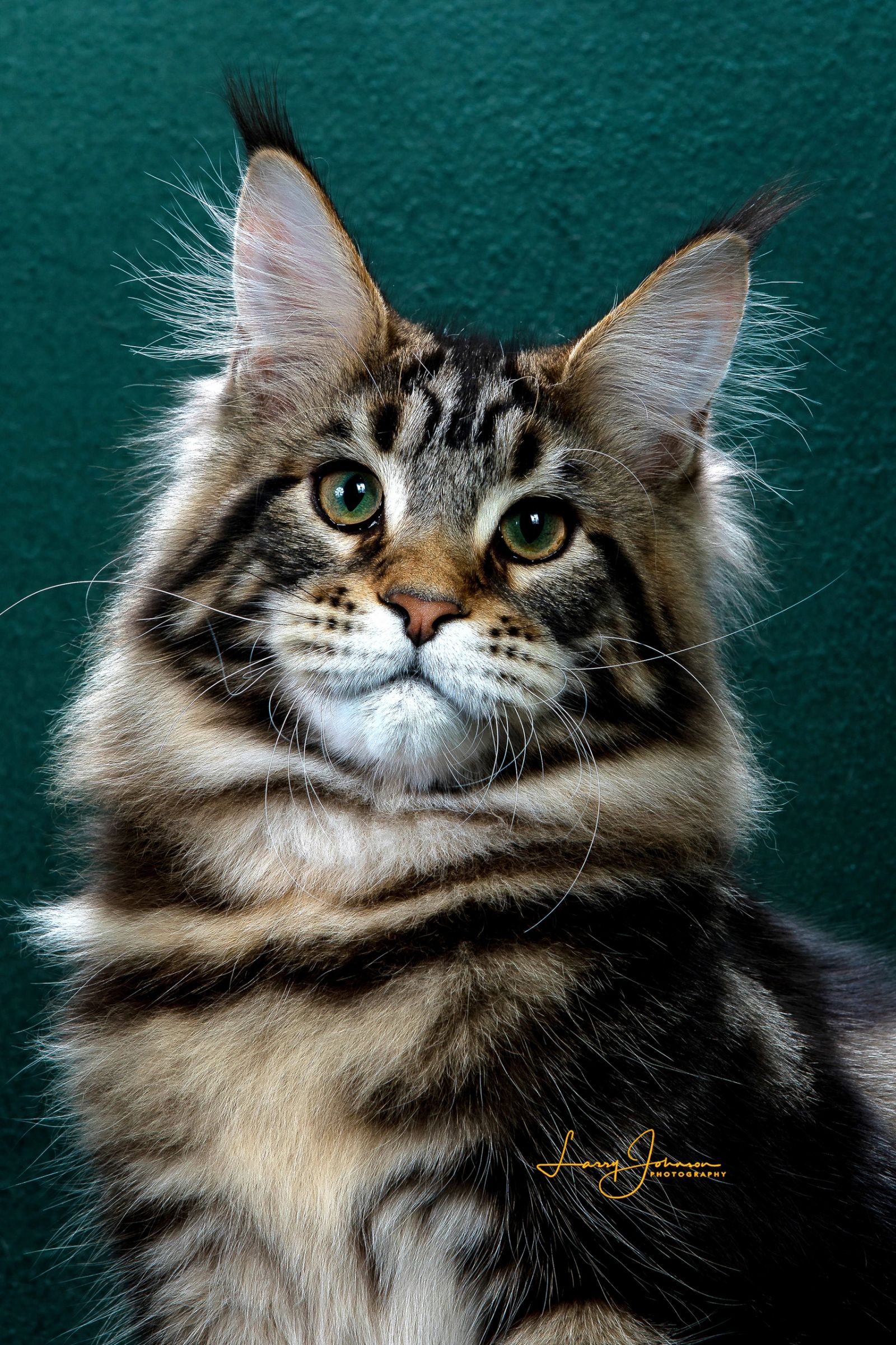
Maine Coons are regal, mysterious and larger than life. Future owners and cat lovers alike are often amazed by how beautiful these gentle giants are. One topic comes up more and more often in the Maine Coon community: Maine Coon eye colors, and specifically the popular belief that blue eyes are now possible in a purebred Maine Coon of any color. That belief could not be more wrong. In this post, we unravel some of the finer points of Maine Coon genetics and point out the small details that set a well-bred Maine Coon apart.
A Look Back at the Maine Coon's History
The Maine Coon's story is closely tied to the rugged New England countryside. The breed is thought to have developed through the region's brutal winters, and its thick, water-repellent coat, tufted ears and big, bushy tail were practical adaptations to that climate. Still, it was their hardy constitution and warm, sociable personality that truly won people over. Telling this story is not just nostalgia; it is key to understanding why traditional traits, eye color included, remain such an important part of the breed's legacy.
Look into a Maine Coon's eyes and you expect to see the rich depth of gold, green or a captivating mix of both. These signature shades are more than a source of wonder; they are a sign of the breed's authenticity.
TICA Standards and True Maine Coon Traits
The International Cat Association (TICA) sets strict guidelines describing the ideal traits of a show-quality Maine Coon. Its standard covers a wide range of qualities, from size, weight and coat length all the way to temperament. It serves as a guiding light for breeders working toward excellence and preservation.
Eye color is a key part of TICA's written standard. For a Maine Coon that is not white, the only accepted eye colors are shades of green, gold or the striking mix of both called green-gold. This underscores the value of the breed's ancestral identity and keeps breeders from watering down its natural traits.
The Blue-Eyed Maine Coon Myth
Every kitten is born with blue eyes, but a Maine Coon kitten's eyes won't stay blue for long. By eight weeks of age, a purebred Maine Coon kitten's eye color starts to shift. By four to six months, the adult eye color is clear, and it will not be blue.
In truth, blue eyes in an adult Maine Coon, when they are not linked to a white coat, are a clear sign of crossbreeding. As demand for Maine Coons has grown, some breeders have mixed other breeds into the gene pool, producing blue-eyed kittens that fall outside TICA standards. The misunderstanding keeps alive the idea that blue eyes are a desirable Maine Coon trait, when in reality they run against the breed's authenticity.
At its simplest, crossbreeding means mating two animals of different breeds so their offspring may inherit physical and temperament traits from each parent. With Maine Coons, it means pairing these majestic cats with other breeds, which can bring in variations that breed standards do not recognize, including blue eyes in adulthood.
In the hunt for unusual or in-demand traits like blue eyes, breeders have crossed some Maine Coons with breeds known for that eye color. Siamese cats, for example, are famous for vivid blue eyes because of a genetic trait that affects melanin production. Breeds such as the Ragdoll and the Himalayan, both prized for their captivating blue eyes, may also have been brought into the Maine Coon gene pool. These crosses can produce kittens with a distinct look, but they depart from the purebred Maine Coon line and fuel debate among breeders about the breed's purity and preservation.
Breeder Ethics in the Maine Coon Community
Here at Maine Street Coons, as stewards of this majestic, ancient breed, we take our duty to protect its distinctive traits very seriously. That means honoring the breed standard, even when popular opinion pulls the other way.
Maine Coon breeders are as varied as the breed's own roots. Some of us, myself included, act as guardians of tradition, raising Maine Coons while holding firmly to TICA or CFA standards and to the cat's New England heritage.
Others drift off course, chasing market fads such as "Blue Eyed" Maine Coons and "European Maine Coons" and undermining the breed's integrity and sometimes its health. These differing approaches say a great deal about a breeder's education, values, motives and ethics.
Why Champion Lines Matter
Champion bloodlines are more than a mark of pride; they are proof of a Maine Coon's genetic purity and faithfulness to the breed standard. Some may say a cherished pet has no need for a pedigree full of champions, yet choosing a kitten from champion lines brings many benefits. It assures a certain degree of health and temperament, and it guarantees an authentic genetic makeup. Choosing champion lines means investing in quality, and with that assurance you enter a partnership with a breeder devoted to raising cats that carry the Maine Coon legacy in every loving gaze.
Protecting the Maine Coon's Future Through Informed Adoption
For anyone hoping to own a Maine Coon, the split within the breeder community shows why careful research matters. If you care about lasting tradition and about preserving the United States' only native long-haired cat breed, look for breeders who know the breed deeply and care passionately about its future.
The gaze of a Maine Coon shows us more than its soul; it stands as a symbol of the breed's resilience and charm. When we educate ourselves and other enthusiasts, and support ethical breeding by choosing our breeders wisely, we build a future in which these captivating cats are admired for all the right reasons.
Adopting means choosing love, responsibility and commitment. Next time a Maine Coon's mysterious eyes catch yours, remember that rich green or gold stands for a proud heritage and a steady dedication to excellence. This is about more than a breed; it is about protecting a legacy worthy of honor and preservation.
Warm Regards,
Kyra Hagan
Preservation Breeder