
HCM in Maine Coons: Understanding the Heart Disease Every Owner Should Know
November 4, 2023|Health & Nutrition
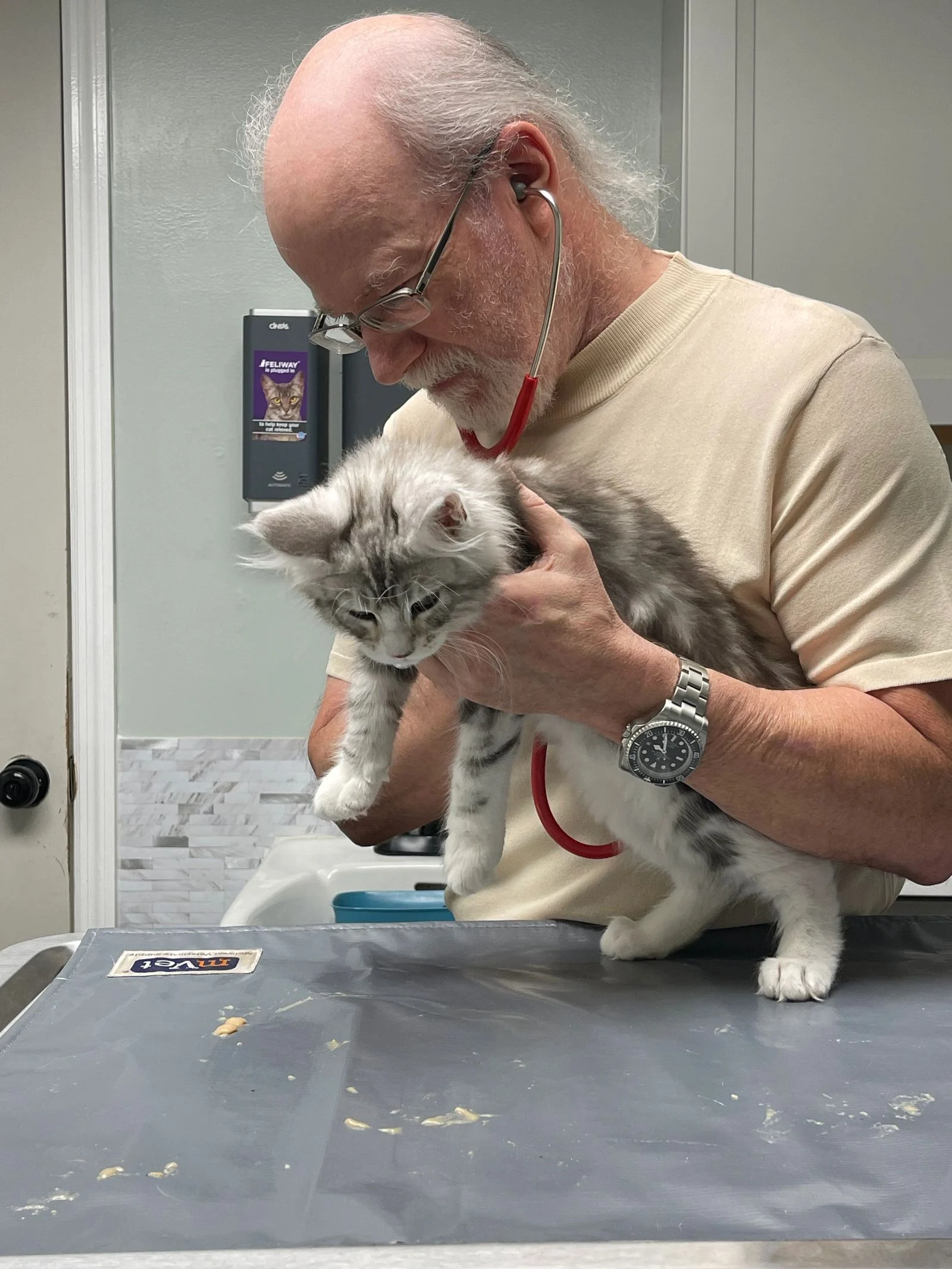
What Is Feline Hypertrophic Cardiomyopathy (FHCM)?
Feline hypertrophic cardiomyopathy (FHCM) is a hereditary disease that leads to heart failure and sudden death in cats, and the Maine Coon and Ragdoll are hit harder than other breeds. That is why HCM in Maine Coons is such a serious topic. Genetic researchers estimate that the main known mutation behind HCM affects 25 percent of the breed. Ethical Maine Coon breeders work hard to breed away from this mutation, but sadly, many backyard breeders and kitten mills skip proper testing of their breeding cats. As a result, they keep passing feline HCM through affected family lines to new generations of kittens.
Could My Maine Coon Kitten Develop HCM?
For a Maine Coon kitten who is healthy today, the first warning sign of possible feline HCM later on is a history of the disease in either parent's bloodline. The next biggest risk factor is a DNA test that comes back positive for the known mutation tied to the disease, called the HCM1 genetic mutation.
You can find out at home whether your Maine Coon inherited the HCM1 mutation with one of several affordable DNA tests sold commercially. Popular choices include Basepaws, Catscan by Neogen Labs, and Optimal Selection by Wisdom Panel, plus others. The lab sends you a kit, you gather a sample at home (most often a cheek swab), mail it back, and your results usually arrive in two to three weeks.
The results will tell you whether your Maine Coon cat or kitten carries one copy (heterozygous) or two copies (homozygous) of the HCM1 mutation, or whether they are fully negative, which is the outcome you hope for.
- A cat that received no copy of the mutation from either parent will test N/N.
- A cat carrying one copy of the mutation will test HCM/N. A Maine Coon with one copy of the HCM1 genetic mutation is ~1.8X as likely to develop HCM as a Maine Coon without it. In a breeding program, a heterozygous cat will hand the mutation down to roughly half of its kittens.
- A cat carrying two copies will test HCM/HCM. Maine Coons that carry the HCM1 mutation twice over (one copy inherited from each parent) have 18X the risk of developing HCM. In practical terms, you should assume a homozygous Maine Coon kitten is more likely than not to develop the disease. Bred, such a cat passes the mutation to 100 percent of its kittens. A Maine Coon carrying the HCM1 mutation in both copies needs regular HCM screening for life and should never be used for breeding.
Here is a section of Oscar's DNA results. Every one of our breeding cats is tested with Catscan by Neogen Labs. As you can see, Oscar is Normal (Clear) for the mutation linked to HCM in Maine Coon cats.

Will Every Maine Coon With a Positive HCM1 Result Develop HCM?
Thankfully, no. HCM shows "incomplete penetrance" and "variable expression." Put simply, a cat with the mutation may or may not develop HCM, and when it does, the severity of symptoms differs greatly from cat to cat, even within the same family. A Maine Coon with two copies of the HCM1 mutation is 18x more likely to develop HCM than a cat with no mutation, and the disease tends to be more severe in these cats, yet symptoms can still vary widely among the cats that are affected.
Can a Maine Coon With a Negative HCM1 Test Still Develop HCM?
Sadly, yes. Some Maine Coon cats and kittens that test negative for the known HCM1 mutation still go on to develop HCM. One study found that seven of 21 Maine Coons diagnosed with feline HCM did not have the known mutation. Why does this happen? The hard truth is that at least one, and possibly more, genetic causes have not been identified yet, so they are not covered by current DNA tests.
Here is one example. A few years ago, a puzzled owner contacted a researcher at the University of Cincinnati's College of Medicine about a Maine Coon named Freddie, and the team found a different genetic heart variant behind his problems. Using blood samples from Freddie and both of his parents, the researchers ran genetic sequencing to search for other variants that could explain his illness. They discovered that each parent carried one mutated copy of troponin-T (TNNT2), a gene associated with sudden cardiac death in people. The study was published in the scholarly journal Frontiers in Physiology.
We hope that before long we will learn more about this variant and any others that may cause HCM in the Maine Coon cats we love, along with ways to test for them. Since human HCM and feline HCM are so alike, researchers keep studying HCM in Maine Coons, and we are hopeful this work will bring more breakthroughs.
How Do I Find a Maine Coon Kitten With a Low Risk of HCM?
As a pet buyer, you can spare yourself heartache and help put backyard breeders out of business by doing careful research and picking a breeder who treats health testing as a top priority. Look for an ethical breeder who pairs DNA testing with regular echocardiogram screening by a veterinary cardiologist. Together, these two tools are the gold standard for HCM health testing.
Best practice for Maine Coon breeders is to breed only DNA-negative cats and to have each possible breeding cat receive an echocardiogram at 10-12 months of age, before they are ever bred, then on a regular schedule afterward. Males should have an echo every year, since one male can sire so many kittens annually. For females, a sensible plan is testing at age one, then again at three and at five.
How Does Feline HCM Affect a Maine Coon's Heart?
Think of the heart as a pump with four chambers, split into a left side and a right side. Each side has two chambers: an upper, thin-walled chamber that receives incoming blood (the atrium) and a bigger, lower chamber (the ventricle) that blood flows into from the atrium. On the left side, the atrium takes in oxygen-rich blood coming from the lungs, while the left ventricle pushes that blood out to every part of the body that depends on it.
In a Maine Coon with HCM, the walls of the left ventricle grow abnormally thick and stiff. This damaged chamber cannot relax enough between heartbeats for the oxygen-rich blood in the left atrium to flow in normally. Since the ventricle never fills all the way, it cannot pump enough blood to supply the oxygen the body needs.
Picture blowing a deep breath into a thin latex balloon. The way your breath flows easily into it is like blood moving from the atrium into the left ventricle of a healthy heart. Now picture blowing that same breath into a hot water bottle. That thick, rigid bottle is like the left ventricle of a Maine Coon with feline HCM. Naturally, blood enters the stiff chamber far more slowly, so the left ventricle cannot fill completely with oxygenated blood before the next heartbeat.
Since the left ventricle cannot take in all the blood the atrium pushes toward it, too much blood collects in the left atrium. Little by little, the atrium stretches to hold the extra blood. As it stretches, it weakens, much like a balloon that has been overinflated again and again. And the weaker the atrium gets, the harder it is for it to push blood into the stiff ventricle.
This sets off a vicious cycle. Because it cannot deliver enough blood to meet the body's oxygen demands, the heart speeds up on its own. Keeping up that fast pace means the heart muscle needs even more oxygen-rich blood, which it has no way of getting. The faster a heart with HCM beats, the less efficient it becomes, and the ongoing oxygen shortage does more harm to the heart cells and to the left ventricle walls.
From there, the situation spirals. The pumping action of the heart becomes badly impaired, and the Maine Coon develops congestive heart failure. In this condition, fluid backs up and builds in the lungs, which causes serious difficulty breathing and ultimately leads to the cat's death.
Sudden death is a rarer but heartbreaking result of feline HCM, and it can strike with no warning, even in kittens as young as five months. In the worst cases, a Maine Coon that looks perfectly healthy can seem fine one moment and be gone moments later. This is most often caused by a sudden, severe cardiac arrhythmia (an electrical problem) or by thromboembolism, which happens when a blood clot forms in the heart, travels through the bloodstream and badly damages another part of the body, such as the legs, lungs or brain.
At What Age Do Maine Coons Develop HCM?
The timing and course of feline HCM in Maine Coon cats depends on how severe the disease is in each cat. It is unlikely to be found while a young kitten is still at the breeder's home. More often, HCM shows itself in late kittenhood or the adolescent stage, when a Maine Coon is between 8 and 36 months old. After it is found, HCM keeps getting worse through young adulthood until it reaches a critical point. Most Maine Coons that become seriously ill with HCM are at their worst between 18 months and three years old. Still, some cats show no HCM symptoms until much later in life, and more females than males receive a later-in-life diagnosis.
What Signs of HCM Should I Watch For in My Maine Coon?
Since its expression varies, many cats with HCM never show any symptoms. Some live a normal life, while others fall acutely ill or die suddenly with no warning. Warning signs that call for a veterinary visit and a cardiology consult include:
· A cough with no clear cause
· Weakness or tiredness that seems unusual for the cat's age
· Loss of appetite
· Labored breathing or shortness of breath
· Abnormal heart sounds (murmurs, a galloping rhythm, muffled sounds)
· Trouble tolerating exercise or energetic play
· Sudden paralysis of the hind legs, or sudden blindness
· Collapsing
How Do Vets Diagnose HCM?
Because so many cats with HCM have no symptoms, yearly checkups with your veterinarian matter a great deal. An adult Maine Coon found to have tachycardia or a heart murmur during a physical exam should be evaluated more closely by a cardiologist. If you or your vet suspect HCM, schedule a visit with a veterinary cardiologist who is board-certified. Along with reviewing lab work and DNA test results, the cardiologist will examine your Maine Coon and listen for a murmur, which can occur when blood flows abnormally across the heart valves. They will also monitor your cat's heart rate, since cats with HCM often have tachycardia (a faster than normal heart rate). Following the exam, the cardiologist will do an echocardiogram (an ultrasound of the heart) to measure how thick the heart muscle is, how large the chambers are, and how blood moves through the valves with Doppler. The echo is the gold standard for confirming a definitive diagnosis of HCM.
Is There Treatment or a Cure for HCM?
A Maine Coon diagnosed with HCM can receive treatment, but the condition is difficult to manage, even for specialists. A veterinary cardiologist needs to be part of the care team, and the expense is considerable. Treatment relies on medication, with three goals: controlling the cat's heart rate, easing congestive heart failure (fluid in the lungs), and preventing blood clots, which are often fatal.
Atenolol is a common choice, since it helps the heart contract and may lower the chance of sudden death. ACE inhibitors are also used. When a cat has heart failure related to HCM, the cardiologist may prescribe furosemide to help clear excess fluid from the lungs. Last, blood thinners such as Plavix may be used to try to stop clots from forming in the heart and traveling to other parts of the body, with devastating results.
All the vet and cardiology appointments, the testing and the medications add up to a heavy burden. The cat may feel unwell, and the devoted owner lives with constant worry. Heartbreakingly, even with the finest medical care, many Maine Coons carrying two copies of the HCM1 genetic mutation die of HCM by age four.
Disclaimer:
This information from Maine Street Coons and owner Kyra Hagan is shared for general educational purposes only, drawing on the breeder's personal experience. It does not constitute professional veterinary advice, diagnosis or treatment. Kyra Hagan is not a licensed veterinarian, and Maine Street Coons is a privately run cattery.
Please make every health decision with a licensed veterinarian who has personally examined your cat. Each Maine Coon is an individual, and health outcomes can differ because of genetics, environment and other factors.
Maine Street Coons does not guarantee that the information here is accurate or applies to your situation. Always ask your veterinarian for advice specific to your cat. In a medical emergency, call your vet or an emergency animal hospital right away.
Sources:
https://www.ncbi.nlm.nih.gov/pmc/articles/PMC3044103/
https://phys.org/news/2021-03-maine-coon-cat-owners-feline.html