
Wonder and Worry: What Happens When a Maine Coon Is Giving Birth
September 19, 2025|Breeding
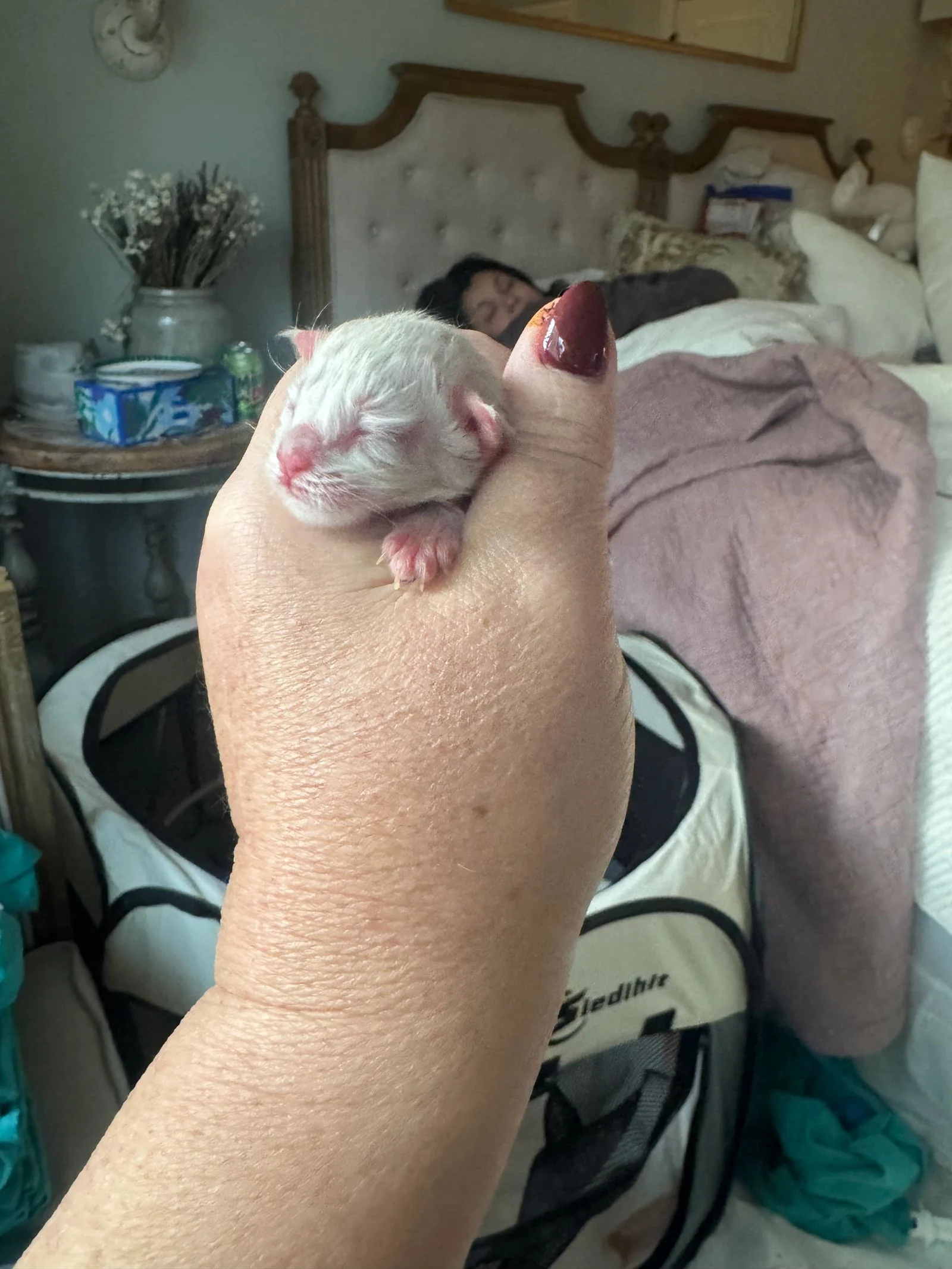
Welcoming new life is a moving experience, and responsible breeders meet each Maine Coon birth with equal parts excitement, preparation, and deep respect. For a future kitten owner, learning how birth (called queening) works offers a rare look at the devotion behind your new companion. It also shows why breeders follow certain routines to keep the mother cat and her delicate newborns safe.
In this post, we walk through what happens when a Maine Coon is giving birth. We cover how long labor lasts, what the breeder does, the problems that can come up, and the tender subject of early kitten loss. Knowing all of this helps you appreciate the care your kitten has had since its very first breath.
Queening: A Labor of Love and Patience
A cat’s labor is nothing like a quick stork delivery. It unfolds in several stages and can be long and hard to predict. Because Maine Coons are a large breed, the process calls for close watching and plenty of patience.
Stage One: Early Labor
Early labor can be quiet and may last anywhere from 12 to 36 hours. In this window, the queen (the mother cat) starts showing that her kittens are coming. She may pace or seem unsettled, begin nesting in the birthing box or bed the breeder has set up, or turn more talkative and cuddly.
Inside, her cervix is starting to open and the uterus is beginning to contract, often without any outward sign. A good breeder keeps the space calm and quiet so the queen feels safe. Stress can stop labor in its tracks, so a peaceful setting is the first and most important kind of support.
Stage Two: Active Labor and Delivery
Now the kittens arrive. This stage can run from 2 to 24 hours, depending on litter size and the queen herself. Kittens come one at a time, usually 30 to 60 minutes apart, though gaps of several hours are fairly common.
Here the breeder becomes fully hands-on and stays for every moment, watching the queen closely for any sign of distress. As each kitten arrives, the breeder makes sure the amniotic sac is cleared so the kitten can breathe. If the queen is worn out, the breeder helps clean the kitten, clamps and cuts the cord when needed, and makes sure the newborn begins nursing to get vital colostrum.
Stage Three: Delivering the Placentas
A placenta follows each kitten. The breeder must count every one to confirm none stay behind, since a retained placenta can cause a serious infection. Many queens eat their placentas, a natural instinct that gives them extra nutrients.
The Breeder as Midwife, Guardian, and Advocate
A responsible breeder does far more than watch from the sidelines. They act as a seasoned midwife, ready with know-how, supplies, and a steady presence for whatever the birth brings.
At Maine Street Coons, we go a few steps further so every kitten gets the strongest possible start. Right after birth, we look over each newborn for a cleft palate or anything else that could keep it from latching and nursing well. We also clean each umbilical cord site with care to help guard against bloodborne infection, called sepsis. On top of that, we weigh every kitten at birth and then every day, so we can track weight gain closely and respond fast if something seems off.
Constant Monitoring: The breeder keeps watch for dystocia, meaning a difficult birth. Warning signs can include a kitten stuck in the birth canal, a sudden halt in contractions, or a queen in severe pain or exhaustion. An experienced breeder knows when to let nature work and when to step in or get emergency veterinary help.
Hands-On Assistance: Whether clearing an airway or reviving a weak newborn, the breeder is the first protector of these delicate lives. Supplies are ready ahead of time: clean towels, a suction bulb to clear fluid, hemostats for the cords, and a warm, safe box to hold the kittens while their mother keeps laboring.
Post-Natal Care: The work continues after the final kitten. The breeder makes sure the queen is settled and comfortable with food and water nearby, confirms she is nursing her litter well, and weighs the kittens every day to be sure they are gaining and thriving.
When Things Go Wrong: Facing Complications
Complications can happen even with excellent genetics, good prenatal care, and skilled help. Nature does not always cooperate, and accepting that is part of being both a responsible breeder and an informed owner.
Possible problems include:
- Dystocia (Difficult Birth): A kitten that is oversized or badly positioned may need veterinary help, sometimes a C-section.
- Uterine Inertia: The queen’s uterus can stop contracting, which stalls labor and puts the unborn kittens at risk.
- Retained Placentas or Kittens: Without prompt treatment, these can cause life-threatening infection.
- Hemorrhage: Heavy bleeding after birth is an emergency and needs veterinary care right away.
Breeders get ready for all of this, yet sometimes, even after every possible effort, a kitten, or even the queen herself, does not make it. That is the painful reality breeders live with.
Understanding Early Kitten Loss
A kitten is at its most fragile during the first few weeks of life. This stage is often associated with "fading kitten syndrome," when a kitten that looks healthy can suddenly weaken and die.
Statistics show that in pedigreed catteries, neonatal mortality (loss within the first two weeks) can be roughly 15-20%, even when husbandry is excellent. Some studies report higher rates, with many losses happening in the first week. These deaths are usually not caused by neglect but by hidden problems that are often impossible to detect.
Frequent causes include:
- Congenital Defects: Hidden genetic or birth defects can leave a kitten unable to survive.
- Low Birth Weight: Small kittens have a harder time competing for milk and staying warm.
- Maternal Issues: A new mother might hurt a kitten by accident, or she may not make enough milk.
- Infections: A newborn’s immune system is still immature, leaving it open to viral or bacterial infection.
Protecting Hearts: Why Breeders Ask You to Wait
That leads to a delicate but important subject: why breeders often ask families to hold off before bonding with one particular kitten. It is not about secrecy or keeping you at arm’s length. It is a way of protecting everyone’s heart, yours and theirs.
Picture picking out a one-week-old kitten, naming it, and imagining your life together, then getting a call that it has died. That grief is real and deeply painful. To spare you that, breeders like to wait until the litter is through the riskiest early weeks. By 5-6 weeks old, kittens have shown their strength, their personalities have emerged, and the chance of sudden loss has dropped sharply.
The wait also gives the breeder space to grieve any loss in private, and it means that the first time you meet your kitten, you are connecting with a healthy, thriving little character who is ready to begin life with you.
A Partnership Built on Trust
Seeing what goes into labor and delivery shows just how much emotion, money, and time a reputable breeder invests. Breeders protect their cats and write the opening chapter of your kitten’s life. When you respect their practices, you honor the devotion it takes to raise a healthy, happy Maine Coon. That patience on your part begins a relationship built on trust, one that ends with a wonderful new companion in your home.