
Early Spay/Neuter and Your Maine Coon: Why We Choose to Wait
December 5, 2025|Health & Nutrition
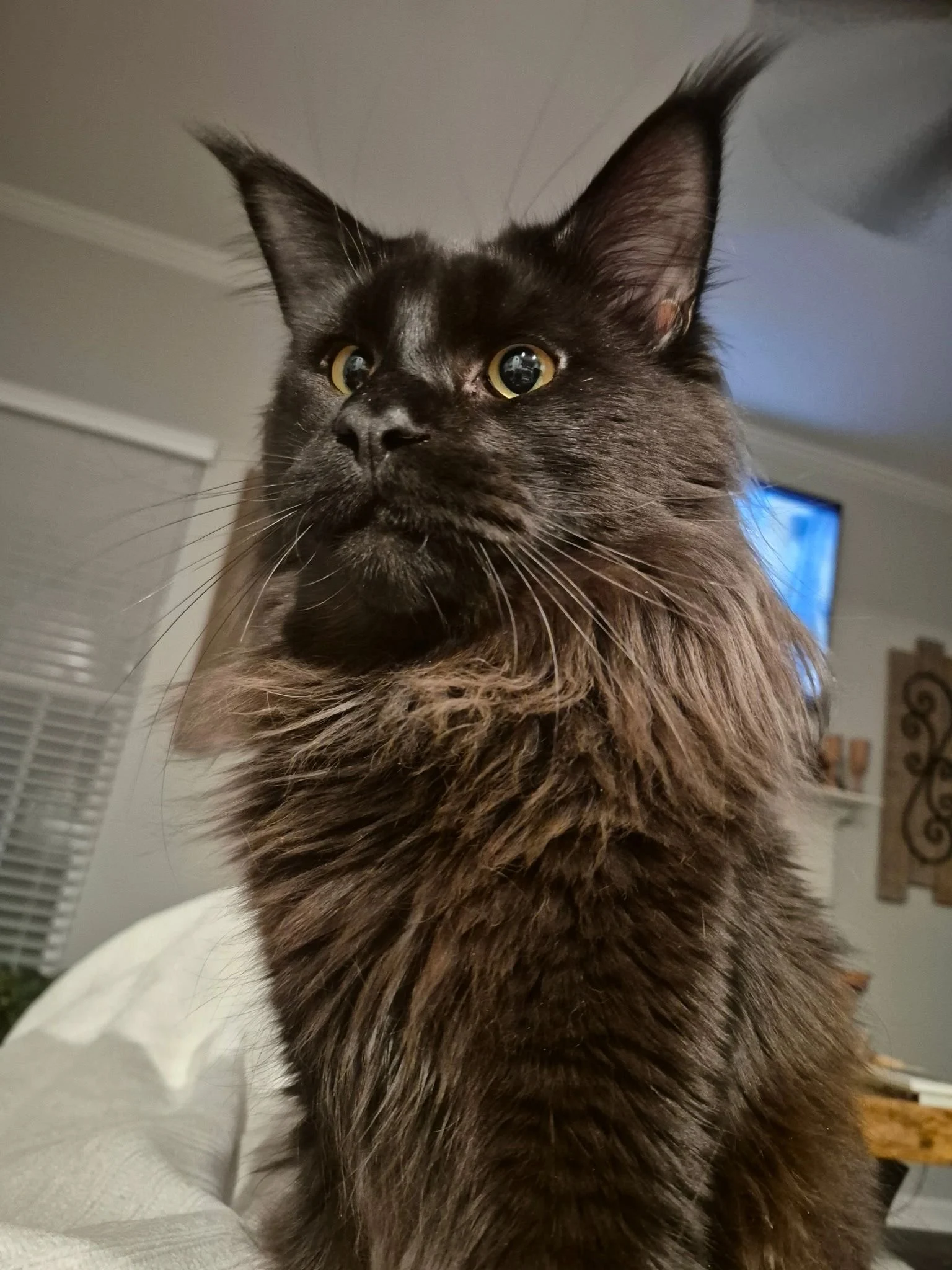
Welcoming a Maine Coon kitten home is a thrilling time. These gentle giants are loved for their stunning appearance, playful character and affectionate ways. As a caring owner, you want to get everything right for your newest family member, including making well-informed health decisions. Among the biggest choices you'll make is when to have your kitten spayed or neutered.
For many cats, the usual advice has been "the sooner, the better." Yet a growing body of evidence suggests this isn't the best path for a large breed that matures slowly, like the Maine Coon. Our approach is to wait until a kitten is more physically developed, and in this post we explain the main reasons why avoiding early spay/neuter matters so much for a Maine Coon's long-term health and well-being.
Anesthesia Risks in Very Young Kittens
Every surgery carries some risk, and anesthesia is a major part of it. In small, very young kittens, those risks grow. Their little bodies are still developing, and they cannot process anesthetic drugs as efficiently as an older, more mature cat can.
The liver and kidneys, the main organs that break down anesthesia and clear it from the body, are not yet fully functional in a kitten just a few weeks old. That immaturity raises the chance of complications. Young kittens also struggle more to regulate body temperature and blood sugar, which leaves them more vulnerable to hypothermia and hypoglycemia both during surgery and afterward. Skilled veterinarians can manage these risks, but they are naturally lower in a kitten that is older, bigger and more physically stable.
Protecting Urinary Health in Males
Among the strongest arguments against neutering male Maine Coons early concerns urinary tract health. A male's urethra is a narrow tube, and sex hormones such as testosterone help shape its full development. If a male kitten is neutered too soon, before that development finishes, the urethra may stay narrower than it otherwise would.
Later in life, that smaller diameter can turn into a serious problem. Male cats are already prone to urinary trouble, including blockages caused by crystals or inflammatory material. If the urethra stays narrower, the cat faces a much higher risk of a life-threatening urinary obstruction. Waiting until the kitten matures lets these structures develop completely, which may lower the risk of painful, dangerous blockages in the future.
Making Room for Healthy Growth
As one of the biggest domestic cat breeds, Maine Coons take a long time to reach full size and often don't finish maturing until three to five years of age. Their growth is complex, and sex hormones are key to making sure their bones and joints form properly.
How Hormones Affect Growth Plates
A kitten's long leg bones grow from zones of soft cartilage known as growth plates. When puberty ends, sex hormones tell these plates to close, and the bones stop getting longer. Spaying or neutering a kitten early takes away that hormonal signal. The growth plates may then remain open longer, so the bones keep growing for an extended time.
You might think that would simply produce a taller cat, but it can throw things out of balance. The bones can grow out of proportion, changing the cat's overall structure and putting abnormal strain on joints and ligaments.
Concerns for Hips and Joints
For a big, heavy-boned breed like the Maine Coon, this change in development is a serious worry. A number of studies have suggested a connection between early spay/neuter and more frequent orthopedic problems. Research has found, for instance, higher rates of hip dysplasia among cats and dogs that were neutered before six months of age. This painful condition, hip dysplasia, occurs when the hip's ball and socket don't fit together correctly, causing arthritis and trouble moving.
A rarer but serious problem is avascular necrosis of the femoral head, in which bone tissue in the "ball" of the hip joint dies spontaneously because its blood supply is lacking. The exact causes are complicated, but hormones are thought to influence bone development and health, and disrupting those processes early may be a contributing factor.
Why Patience Pays Off
When we wait until a Maine Coon is nearer to physical maturity, its body can develop the way nature designed. The advantages are clear:
- Lower Anesthesia Risk: A bigger, stronger kitten is better prepared to handle surgery.
- Better Urinary Health: A male's urethra has time to reach its full, natural width.
- Healthy Musculoskeletal Development: Sex hormones direct the proper closing of growth plates, supporting strong, well-proportioned bones and steadier joints. This may reduce the risk of problems such as hip dysplasia.
Most breeders and veterinarians who focus on large breeds advise holding off until a Maine Coon reaches at least 8-10 months of age, and in some cases closer to a year. This timing lets the kitten gain the developmental benefits of its natural hormones before surgery takes place.
Choosing What's Best for Your Maine Coon
Choosing when to spay or neuter your Maine Coon will affect their health for years. Early alteration is standard in shelters as a way to control pet populations, but the health needs of a purebred, slow-growing cat living in a responsible home are not the same.
We strongly urge you to talk this over with your veterinarian. Weigh the evidence along with the Maine Coon's particular needs, and you can choose what best supports a long, healthy, happy life for your magnificent cat.
Disclaimer:
Information from Maine Street Coons and from its owner, Kyra Hagan, is intended only for general education and reflects the breeder's own experience. It should not be taken as professional veterinary advice, treatment or diagnosis. Kyra Hagan is not a licensed veterinarian, and Maine Street Coons is a private cattery.
Every health decision should be made together with a licensed veterinarian who has seen and examined your cat. Each Maine Coon is an individual, and health outcomes may differ because of genetics, environment and other factors.
Maine Street Coons does not guarantee that the information provided is accurate or that it applies to your situation. Always ask your veterinarian for advice specific to your cat. In a medical emergency, call your vet or an emergency animal hospital right away.